Why the Cycling and Running Communities Became So Specific About Their Water Bottles
Spend any time in a serious running group or a cycling club and you’ll notice something: people have strong opinions about their water bottles. Not about brand names, but about very specific functional details — the size of the opening, how far the nozzle extends, how much force is needed to get liquid out at pace, whether the bottle fits in a jersey pocket without bouncing. These are not the conversations that general consumers have about water bottles.
This specificity developed for a reason. Both communities learned through experience that the wrong bottle isn’t just suboptimal — it actually changes behavior in ways that affect performance and safety. Once you understand what they’ve figured out, the reasoning makes sense even if you’ve never run a race or ridden a century.
The Problem With Drinking While Moving
Drinking from a bottle while sedentary is a simple act. You pick it up, open it, tilt it, drink, close it, put it down. The whole sequence takes a few seconds and involves full attention and both hands.
Drinking while running or cycling removes most of those conditions. On a bike, one hand should stay on the handlebars — ideally both hands, especially on descents or in traffic. At running pace, you’re working against the natural bounce and rhythm of your stride. Your breathing is elevated, your coordination is partly redirected, and fumbling with a lid or cap at the wrong moment can interrupt your form or, on a bike, create a real hazard.
This is why both communities converged on soft squeeze bottles with sports nozzles rather than screw caps or flip-top lids. A squeeze bottle can be operated with one hand, requires no mechanical manipulation beyond pulling the nozzle with your teeth or thumb, and delivers a controlled stream rather than requiring you to tilt and wait. Experienced cyclists can grab a bottle from a cage, drink, and return it without looking down. That’s a learned skill, but it requires the right equipment to learn.
What Runners Prioritize vs What Cyclists Prioritize
The two communities have overlapping needs but different constraints, which has pushed their preferences in slightly different directions.
Runners tend to carry less water per unit of time than cyclists because running generally covers less ground, and many road races have aid stations. For training runs, the question is often whether to carry a bottle at all, and if so, how. Handheld bottles with palm straps became common because they integrate with natural arm swing rather than fighting it. The weight distribution matters: a full bottle in one hand creates asymmetry that affects form over a long run, which is why some runners prefer vest systems for longer distances.
For runners, opening speed and flow rate are paramount. You want to be able to drink in a few seconds without breaking stride, then get the bottle secured quickly. A slow-flowing nozzle requires more suction force when you’re already breathing hard, which is genuinely uncomfortable. Flow rate is something that running communities talk about specifically — “easy bite” or “hard bite” nozzles make a real difference at mile 18 of a marathon.
Cyclists face different constraints. Road cycling involves periods at 25+ mph where aerodynamics matter and one-handed bottle retrieval from a frame cage is a regular action. The bottle needs to be easy to extract and return without looking, which means the shape matters — a bottle that’s too wide, too tall, or too slippery to grip reliably in sweaty conditions becomes a problem at speed. Cycling bottles are also typically larger than running bottles because a long ride generates higher fluid loss and there may be no convenient resupply point for hours.
For cyclists, temperature retention has become more valued as understanding of hydration science has improved. Cold water or electrolyte drinks absorb faster than warm ones, and on a hot day, a bottle that’s gone warm by hour two is less effective than one that’s still cool. This has driven interest in insulated options even among cyclists who previously used standard soft bottles exclusively.
The Weight and Durability Tradeoff
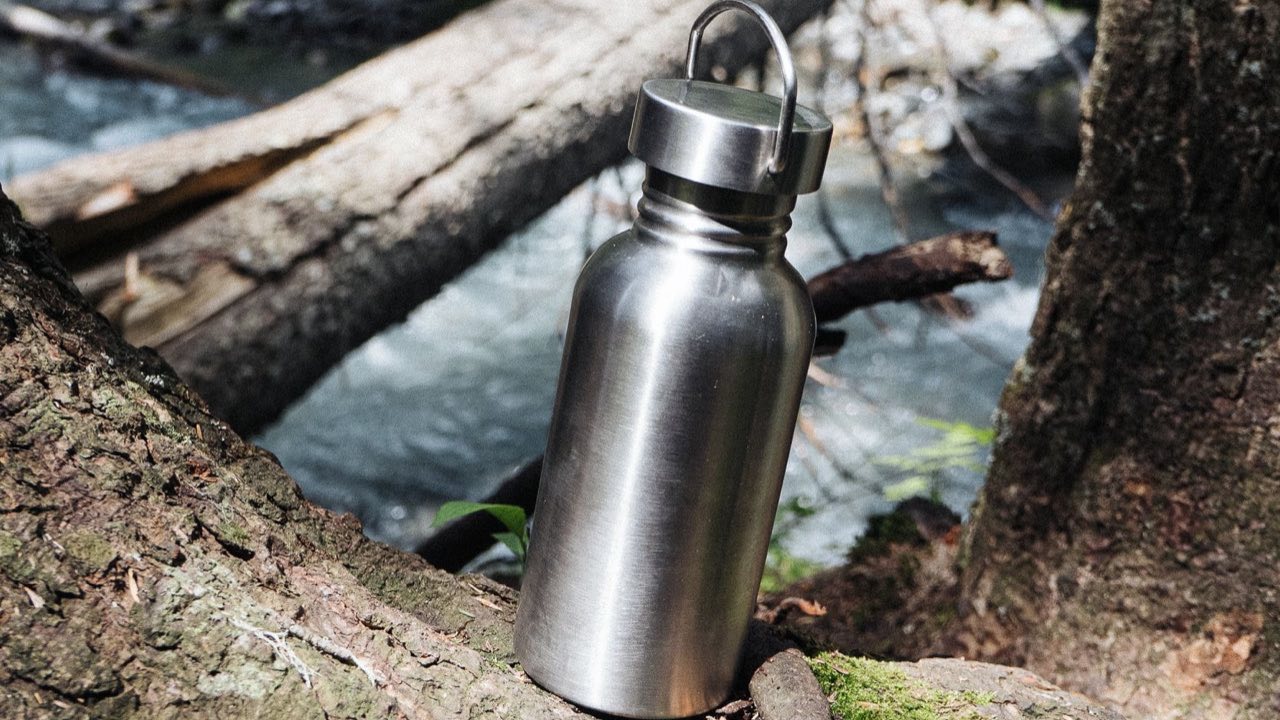
Stainless steel bottles entered these communities later than soft plastic sports bottles, and they haven’t fully replaced them in competitive contexts where weight matters. A 750ml stainless steel insulated bottle weighs more than the equivalent soft bottle, and at a competitive level, grams accumulate.
But the running and cycling communities are not exclusively competitive. The recreational majority — people who train for health, for enjoyment, for long weekend adventures — have different priorities than racers. For them, the insulation benefit of stainless steel has become relevant in a way that overrides the weight concern. A long day on the trails or a multi-hour gravel ride where your drinks stay cold throughout the afternoon is a better experience than saving a few hundred grams at the cost of drinking warm water after the first hour.
Durability is another factor. Soft plastic bottles develop nozzle wear, get crushed, absorb odors from sports drinks after extended use, and need replacement every season or two. A quality stainless steel bottle handles years of daily use with no material degradation. For someone training year-round, the long-term economics favor the more durable option.
What This Means for Anyone Sourcing Bottles for Athletic Use
The specificity of these communities has raised expectations for what a sports water bottle should do. Gym-goers, recreational athletes, and fitness-oriented consumers have absorbed some of this knowledge and now look for features that wouldn’t have registered ten years ago: nozzle type, flow rate, insulation performance, cage compatibility for cycling, weight.
For brands and organizations supplying bottles to athletic communities or fitness-focused buyers, understanding these functional requirements is more valuable than focusing on aesthetics alone. The bottle that gets used consistently is the one built around how it’s actually going to be used — and serious athletes have very clear ideas about what that looks like.
For sourcing stainless steel options that cover the range from everyday hydration to active use, established water bottle suppliers with broad product lines and customization capability are better positioned than those who offer a single generic form factor. The athletic market rewards specificity, and the suppliers who’ve built products around actual use cases rather than category conventions are the ones worth working with.